
عاجل
The reactionary phenomenon of deliberate mass linguicide policy of non-Persian nations in Iran....By:Rahim Hamid
شباط/فبراير 13, 2014
 Preface
I begin my study by addressing some constructive
questions about the common factors that can be attributed to the gradual
extinction of language, which frequently occurs intentionally and
systematically particularly in multiethnic countries that one language strictly
dominated on other languages as a discriminatory policy to assimilate the
language of the ethnic minority or aboriginal people by imposing the most
spoken language of particular majority on these people and placing a long ban
on their languages to build monolingual
country. Apparently, the non-Persian languages
have been subjected to harsh measures of linguicide.
The
Iranian officials seemingly are not willing to stop burying their head under
the sand and accept that people in the integrity so-called Iran are not
homogenous in term of ethnicity to be able to bring them together under a
certain political banner.
The policies of linguicide in Ahwaz region,
enshrined in the constitution and law of Iranian regimes because according to
19 and 15 of Iran constitution all non-Persian ethnic minorities have right for
education in their native language but fascist Persian regime violates the
rights of learning Arabic in Ahwaz and other non-Persian languages such as
Kurdish in east Kurdistan, and Turkish in south Azerbaijan.
This disgraceful policy was adopted by Iran
soon after the collapse of Qajar dynasty and formation of Pahlavi monarchy where
Reza Shah raised to power and formed the integrity so-called Iran under the
slogan of "Aryan land" by occupying non-Persian neighboring regions that had
full autonomy during that era such as Arabestan (Al-Ahwaz) under the rule of
Sheikh Khazaal in the south and south west of Iran that later its historical
Arabic name changed into the current Khuzestan province. Let us put all this
aside and raise some questions concerning language:
1 What is language death?
2 Why should we care?
3 Why do languages die?
What
is language death?
The phrase of language death means a
process that affects speech communities where the level of linguistic
competence that speakers possess of a given language variety is decreased,
eventually resulting in no native or fluent speakers of the variety. Language
death may affect any language idiom, including dialects and languages.
Why
do languages die?
Here, I do include the sociopolitical factors
that are fuelling by Iran as systematic political targets in Ahwaz region for
eliminating the Arabic language among the Ahwazi people whose native language
is Arabic while they have no right to learn their language in an academic
environment.
These sociopolitical factors are official
language policies (monolingual policies), racial discrimination, language
stigmatization, repression, war, forced migration, emergence of settlements and
so on. The above-mentioned factors were
conducted against the Ahwazi Arab people by the hand of Iranian regimes since
1925 until today. However, among these
factors, the Official monolingual policies can be and have been a particularly
decisive factor in language death of non-Persian nations in Ahwaz, Kurdistan, Azerbaijan
where local people speak in their native language that characterize with
aboriginal dialects. In fact, after the Qajar dynasty, which had reigned since
1718, was replaced by the Pahlavi monarchy on non-Persian languages and
cultures began to be enforced through violence.
Why should we care?
While the illiteracy rate in Iran is about 10
to 18 percent, this is over 50 percent among the Arabs men in Ahwaz
(Khuozestan) and even higher for Ahwazi women .the indigenous Ahwazi Arabs
students abandon school that rate 30 percent in the elementary level, 50
percent in secondary level and 70 percent in high school because they force to
study in the official Farsi language which is not theirs. There is not any
official institute for teaching Arabic in Ahwaz and learning Arabic is just
confined to religious study for people who want to be a clergyman consequently
the Ahwazi Arab are semi learner in their native language and are struggling to
learn Arabic despite the denial of their Arabic language .
In fact, the education system in Iran
promoted and enforced a superficial sense of nationalism based on Persian
language and identity. Therefore, the multicultural, multiethnic, and
multilingual character of Iranian was explicitly denied and oppressed.
Moreover, shortly after the establishment of
the Pahlavi dynasty in the1925, all non-Persian ethnic groups and nationalities
in Iran were denied the right to education in their own language. Notwithstanding the fact that the non-Persian nations such as Arabs, Turks,
Kurds, Baluchs, Turkmens, and others constituted the numerical majority in the country,
all the Persian regimes from Pahlavi to the Islamic Republic are sought to
supplant our languages, cultures, and histories with those of Persian minority.
There are four criteria released from
UNESCO indicating languages that are at the risk of death row:
UNESCO LANGUAGE ENDANGERMENT SCALE
Vulnerable:
Most children speak the language, but it may be restricted to certain domains
(e.g., home).
Definitely endangered: Children no longer learn the language as mother tongue in their
home.
Severely endangered: Language is spoken by grandparents and older generations; while
the parent generation may understand it, they do not speak it to children or
among themselves.
Critically endangered: The youngest speakers are grandparents and older people, and they
speak the language partially and infrequently.
Yet, it is not surprise if we admit that
the harshest policy of deliberate linguicide definitely practiced in Iran,
where the entire state machinery is mobilized in order to eliminate the
non-Persian languages including Arabic
,Turkish and Kurdish in both speaking and writing. However, non-Persian people
are free to speak in their native tongue in private spaces (e.g., home).but, it
would be considered a crime against the "territorial integrity" of the state if
a member of the parliament or a political party uses the language in political
campaigns, or if the language used in education or broadcasting. It is still
illegal to write in the language. Most publications in Arabic in Ahwaz are
regularly banned and confiscated, and authors, translators, publishers,
distributers, and even readers are punished by the state.in the recent years
several cultural institutes e.g., Al-HiWar, the cultural institute, was banned
and all its founders arrested and
sentenced to death penalty under some vaguely -worded charges. This cultural
institute despite the severe restriction on its cultural activism was striving
to revive the Arabic language among the young generation by holding some educational,
cultural programs.
Based on the four above standard indicators about
"the language endangerment scale", I will explain the indicators by comparing
them with the suppressed non-Persian languages that are plagued in terrible
restricted domain of a harsh linguicide policy:
Linguicide and experience
Similar to other Ahwazi Arab native speaker, I
have experienced bitter times of linguicide. Born into an Ahwazi Arab family in
an Ahwazis town, I had to get my education in Persian, the only official
language in Iran, a multilingual country where Persian was the native tongue of
any half the population.
At Ahwaz University, where I studied linguistics
(2006-2010), my professors rarely referred to non-Persian languages and if my
classmates from Kurdistan and Azerbaijan or I bring some discussions about
Arabic, Kurdish and Turkish language entities, our professors reluctantly
answered our questions. These
discussions in the class regarding the non-Persian languages would be
considered 'secessionism', the unforgivable charges that are always waged
against our people.
Non-Persian nations were subjected to open and shameful acts of
linguicide, cultural annihilation, and forced assimilation. It is apparent that
the Iranian regime certainly wants non-Persian people to lose their cultural
independence and, in many cases, their spirituality, all of which go hand in
hand with language.
As some historical facts have been passed
from generation to generation to recall how thousands of Ahwazi Arab people in
schools and offices and even in the street were arrested, tortured, and
disgraced on charges of speaking in Arabic particularly in Al-Mohammara during
the Pahlavi regime. Since 1925, Reading or writing in Iran's non-Persian
languages was treated as evidence of secessionism, treason and violation of the
territorial integrity of the state.
The language policy of the Islamic regime,
which came to power in 1979, was no different, in principle, from that of the
secular monarchy. Article 15 of the Islamic constitution, which, in contrast
with the 1906 constitution, does allow for the teaching of "ethnic literature"
in schools, has not been implemented yet. Persian continues to be the only
official language in a country where it is the native tongue of no more than
half the population. Although publications in non-official languages are
tolerated, the symbolic violence, the vilifying of non-official languages, has
not come to the end.
Iranian regime not only targeted the
speaking, writing, folklore music and every other related expressions in
language but also they waged extensive state violence against all the
aboriginal and historical name of places in the non-Persian region. Geographic
terms, including the names of mountains, cities, villages, streets, rivers and
regions, have been persianized.
Today we can see that all the original Arabic
names of cities, villages and rivers in Al-Ahwaz were replaced by fabricated
Persian names. It is likely surprise you that Ahwazi Arab are not allowed to
name their children, as they like. There is a book of permitted names at civil
registers, and no one can pick a name that is not in this book. For instance,
Iranian authorities do not allow people to choose Abu Bakr, Umar, Uthman, or
Aisha as names for their children In Ahwaz. Civil registers will not put these
names on ID cards.
In
many cases, TV Farsi channels, radio stations and magazines openly and
systematically insult the well-respected figures of non-Persian religious or
historical Arab figures steering a symbolic violence, in the form of a
systematic extensive propaganda campaign in order to shame Arab native speakers
into abandoning their language and their identity.
By this assessment, we can classify the
Arabic language in Ahwaz along with other non-Persian languages as "severely
endangered languages" under the threat of extinction or gradual death where
the transmission of language between generations was interrupted by deliberate
Persian machinery of Iranian government . This oppressive policy sometime caused
non-Persian people to kill their own languages. To clarify this situation, I
propose the term "linguistic suicide" to refer to situations where
parents who are speakers of minority language sometime deliberately choose not
to teach this language to their children and instead adopt a majority language
in their home.
The major reason for this phenomenon is the
low prestige attached as language stereotypes to the minority language for
example the Arabic language called the speech of illiterate and rural people.
The Iranian regime by inciting hatred against ethno-linguistic minorities
caused the ethnic minorities to feel themselves discriminated against and
shamefully neglected by the centralized Persian government. This chauvinist
policy also created wide socio-economic gaps between center and the ethnic
minorities particularly the Ahwazi Arab people.
All
these discriminatory policy against language aims to kill the Arabic language
in Ahwaz and other non-Persian languages that lead people to dress Persian
culture. The other reason for linguistic
suicide is concern about children's ability to acquire fluency in Persian
language, the socially-and economically –dominant language in Iran.
The continuous discriminatory policy
against the ethno-linguistic minorities pursued by the Iranian regimes show
that the" linguistic diversity" seen as national threat based on the Iranian
regime's chauvinist ideology for this reason the Iranian regimes systematically
encourage the Persian community to propagate language stereotype policy in the
form of humiliating "ethnic jokes" against non-Persian languages in media or in
education system.
For years, the regime authorities prevent
those who belong to ethnic minorities to get education in their own language in
their schools, which goes against the Article 15 of Iran's constitution with
the fact that in the recent years the regime authorities have imposed
restrictions and have banned the use of non-Persian languages in their most
populated regions.
It
is time for linguists in Iran to stop their silence and speak out against these
systematic linguicide policies conducting against non-Persian languages in Iran
because the death of language is the death of the soul and identity of people.
At the end, I would like to dedicate this
article to everyone who stands to the freedom, every oppressed nation
particularly in the Middle East because the new Middle East must be peace,
friendship and achievement of national rights of the oppressed nations who
lived under racial subrogation for years and the world must open its eyes and
support the suffocated voices of these occupied nations especially in Iran.
Sources:
http://www.kurdishacademy.org/?q=node/180
http://grammar.about.com/od/il/g/languagedeathterm.htm
http://catdir.loc.gov/catdir/samples/cam032/99053220.pdf
http://www.wisegeek.com/why-did-latin-become-a-dead-language.htm
Iran’s dead poets society: The execution of Hashem Shabaani shows the pen can be mightier than the sword
شباط/فبراير 13, 2014
For writing poetry in Arabic, a pacifist, father and carer, was accused of 'spreading corruption' and executed. Robert Fisk reports on the Revolutionary Guards' campaign


In Iran, there should be a Dead Poets Society. Or perhaps a Martyred Poets Society, with its newest member a certain Arab-Iranian from Ahwaz, in the far south-west of
the country, on the Iraqi border.
He has been hanged for "spreading corruption on earth", one of hundreds put to death by the Islamic revolution since 1979. Everything about Hashem Shabaani cries out in shame against his executioners: his pacifist poetry, his academic learning, his care for his sick father – a disabled soldier seriously wounded in the 1980-88 war against the Iraqi invaders of his country – and his love for his wife and only child. Already, of course, he has become a political corpse. His killers, the Iranian interior ministry and a revolutionary tribunal judge called Mohamed-Bagher Moussavi, must be the first culprits.
Then come the Iraqi opposition groups which have spent almost as much time smearing Iranian President Hassan Rouhani for Shabaani's death as they have mourning his loss. And then, of course, history comes clanking into third place as the executioner.
Iran's Revolutionary Guard Corps and interior ministry mandarins have been cut down by bombs in the Arab-majority province of Ahwaz for more than two years. Their revenge is absolute. Shabaani, needless to say, was accused of helping the "resistance", presumably writing poetry in Arabic – and even translating Farsi poetry into the Arabic language – qualifies a writer as a subversive in Iran these days. In a letter from prison, Shabaani said that he could not remain silent against the "hideous crimes against Ahwazis perpetrated by the Iranian authorities, especially arbitrary and unjust executions... I have tried to defend the legitimate right that every people in this world should have – which is the right to live freely with full civil rights. With all these miseries and tragedies, I have never used a weapon to fight these atrocious crimes except the pen."
Perhaps that was Shabaani's undoing. In Iran, the pen can indeed be mightier than the sword, especially when the nation's security services are growing increasingly paranoid about the danger of separatism, not only in Ahwaz, but in Baluchistan, Iranian Kurdistan and among the country's other minority communities.
Hashem Shabaani during in a television interview in 2011
Ironically, the Shah's pseudo-secular regime, overthrown in the 1979 Islamic Revolution, had placed a veneer of nationalism over the Persian tribal and religious leaders inside the new and "modern" state of "Iran".
And although Iranian scholars might object to this, Islam itself "secularised" the people of the Middle East by helping to smother traditional tribalism. This was of no help to 32-year-old Hashem Shabaani. He and a friend – two of 14 human rights activists sentenced to death by Moussavi last July after two years in custody – had been tortured in prison.
In December 2011, he appeared on Press TV, the grim international Iranian satellite channel, where he "confessed" to "separatist terrorism" and supporting Baathism. Even more preposterously, the television station claimed Shabaani had been in contact with the Egyptian President, Hosni Mubarak, and with Colonel Muammar Gaddafi – though presumably before the overthrow of the first and the murder of the second.
Iranian opposition groups, while condemning Shabaani's murder, have blamed President Hassan Rouhani, the new Iranian President – and the West's new best friend in the Islamic Republic since he offered assurances that Iran did not plan to develop nuclear weapons – for the execution.
Rouhani paid a swift visit to Ahwaz last month when, according to opposition figures, he confirmed the death sentences originally passed under the presidency of his unbalanced predecessor, Mahmoud Ahmadinejad.
Blaming the President for state hangings is a common enough practice in the politics of Iran. Some opponents of the regime claim dozens of artists, academics and writers were murdered under the regime of the extremely moderate Ayatollah Mohamed Khatami, even though Khatami was outraged by the deaths of these men, almost all of whom – far from being sentenced to death – were assassinated.
In reality, far more intellectuals met their deaths under Khatami's presidential predecessor, Ali Akbar Rafsanjani. The Iranian Revolutionary Guard, whose cadres were slaughtered in a massive bus bombing in the Arabi Khuzestan province, were not going to have qualms about the "legal" murder of Iranian Arab human rights activists.
Iran several times claimed that the British intelligence services were behind the attacks on government authorities in Khuzestan.
Shabaani himself should have been feted in his native Iran. Born in Ahwaz, he published poetry in both Persian and Arabic, got an MA in politics and led marches in protest at the arrest of students and the expulsion of professors.
The prominent Iranian writer and journalist, Amir Taheri, has written of Shabaani's poetry – much of it non-political – and quoted from Shabaani's verse within days of his judicial killing

.
"For seven days they shouted at me:/You are waging war on Allah," Shabaani wrote of his trial in a poem he called "Seven Reasons Why I should Die".
"Saturday: because you are an Arab!/Sunday, well you are from Ahwaz ... Tuesday: You mock the sacred revolution ... Friday: You're a man, isn't that enough to die?"
Although held for months in the Ahwaz prison called Karoun – after the river about which Shabaani wrote lovingly – he was moved to an unknown destination before his hanging.
Iran’s dead poets society: The execution of Hashem Shabaani shows the pen can be mightier than the sword
شباط/فبراير 13, 2014
For writing poetry in Arabic, a pacifist, father and carer, was accused of 'spreading corruption' and executed. Robert Fisk reports on the Revolutionary Guards' campaign
In Iran, there should be a Dead Poets Society. Or perhaps a Martyred Poets Society, with its newest member a certain Arab-Iranian from Ahwaz, in the far south-west of
the country, on the Iraqi border.
He has been hanged for "spreading corruption on earth", one of hundreds put to death by the Islamic revolution since 1979. Everything about Hashem Shabaani cries out in shame against his executioners: his pacifist poetry, his academic learning, his care for his sick father – a disabled soldier seriously wounded in the 1980-88 war against the Iraqi invaders of his country – and his love for his wife and only child. Already, of course, he has become a political corpse. His killers, the Iranian interior ministry and a revolutionary tribunal judge called Mohamed-Bagher Moussavi, must be the first culprits.
Then come the Iraqi opposition groups which have spent almost as much time smearing Iranian President Hassan Rouhani for Shabaani's death as they have mourning his loss. And then, of course, history comes clanking into third place as the executioner.
Iran's Revolutionary Guard Corps and interior ministry mandarins have been cut down by bombs in the Arab-majority province of Ahwaz for more than two years. Their revenge is absolute. Shabaani, needless to say, was accused of helping the "resistance", presumably writing poetry in Arabic – and even translating Farsi poetry into the Arabic language – qualifies a writer as a subversive in Iran these days. In a letter from prison, Shabaani said that he could not remain silent against the "hideous crimes against Ahwazis perpetrated by the Iranian authorities, especially arbitrary and unjust executions... I have tried to defend the legitimate right that every people in this world should have – which is the right to live freely with full civil rights. With all these miseries and tragedies, I have never used a weapon to fight these atrocious crimes except the pen."
Perhaps that was Shabaani's undoing. In Iran, the pen can indeed be mightier than the sword, especially when the nation's security services are growing increasingly paranoid about the danger of separatism, not only in Ahwaz, but in Baluchistan, Iranian Kurdistan and among the country's other minority communities.
Hashem Shabaani during in a television interview in 2011
Ironically, the Shah's pseudo-secular regime, overthrown in the 1979 Islamic Revolution, had placed a veneer of nationalism over the Persian tribal and religious leaders inside the new and "modern" state of "Iran".
And although Iranian scholars might object to this, Islam itself "secularised" the people of the Middle East by helping to smother traditional tribalism. This was of no help to 32-year-old Hashem Shabaani. He and a friend – two of 14 human rights activists sentenced to death by Moussavi last July after two years in custody – had been tortured in prison.
In December 2011, he appeared on Press TV, the grim international Iranian satellite channel, where he "confessed" to "separatist terrorism" and supporting Baathism. Even more preposterously, the television station claimed Shabaani had been in contact with the Egyptian President, Hosni Mubarak, and with Colonel Muammar Gaddafi – though presumably before the overthrow of the first and the murder of the second.
Iranian opposition groups, while condemning Shabaani's murder, have blamed President Hassan Rouhani, the new Iranian President – and the West's new best friend in the Islamic Republic since he offered assurances that Iran did not plan to develop nuclear weapons – for the execution.
Rouhani paid a swift visit to Ahwaz last month when, according to opposition figures, he confirmed the death sentences originally passed under the presidency of his unbalanced predecessor, Mahmoud Ahmadinejad.
Blaming the President for state hangings is a common enough practice in the politics of Iran. Some opponents of the regime claim dozens of artists, academics and writers were murdered under the regime of the extremely moderate Ayatollah Mohamed Khatami, even though Khatami was outraged by the deaths of these men, almost all of whom – far from being sentenced to death – were assassinated.
In reality, far more intellectuals met their deaths under Khatami's presidential predecessor, Ali Akbar Rafsanjani. The Iranian Revolutionary Guard, whose cadres were slaughtered in a massive bus bombing in the Arabi Khuzestan province, were not going to have qualms about the "legal" murder of Iranian Arab human rights activists.
Iran several times claimed that the British intelligence services were behind the attacks on government authorities in Khuzestan.
Shabaani himself should have been feted in his native Iran. Born in Ahwaz, he published poetry in both Persian and Arabic, got an MA in politics and led marches in protest at the arrest of students and the expulsion of professors.
The prominent Iranian writer and journalist, Amir Taheri, has written of Shabaani's poetry – much of it non-political – and quoted from Shabaani's verse within days of his judicial killing
.
"For seven days they shouted at me:/You are waging war on Allah," Shabaani wrote of his trial in a poem he called "Seven Reasons Why I should Die".
"Saturday: because you are an Arab!/Sunday, well you are from Ahwaz ... Tuesday: You mock the sacred revolution ... Friday: You're a man, isn't that enough to die?"
Although held for months in the Ahwaz prison called Karoun – after the river about which Shabaani wrote lovingly – he was moved to an unknown destination before his hanging.
اشتباكات و حرق العلم الايراني
شباط/فبراير 09, 2014

في عملية بطولية نوعية قاموا شباب من حي الشكارة التابع لمدينة الاحواز العاصمة ، باشتباك مع قوات التعبئة ( البسيج ) التابع للحرس اللاثوري للاحتلال الايراني على اراضي الاحواز المحتلة و حرقوا العلم الايراني امام اعينهم ردا على الطغيان و الظلم الذي يمارسه الاحتلال على ارضنا الطاهرة .
و الجدير بالذكر ان غضب الجماهير و الشارع الاحوازي نتيجة الممارسات الشوفينية و العنصرية المستمرة يوميا و اعدام خيرة شباب الاحواز بمشانق سرية و علنية على ايادي العدو الحاقد على العرب و الشعوب الغير فارسية ، تنوع الكفاح المناهض للاحتلال على الاراضي الاحوازية دفاعا عن النفس و ايمانا بكرامتهم و قضيتهم من قبل الجماهير العربية الاحوازية و لا سيما الشباب .
من هنا نشد على اياديهم تضامنا معهم على ما يقومون به من اصرار و عزم و ارادة و تحدي كما نتوقع منهم المزيد و المزيد و نشيد بهم لتصديهم المستمر لقوات الاحتلال .
للتذكير ايضا ان هذه العملية تمت بنجاح و بدون خسائر حيث رجعوا الشباب بعد حرق العلم الى بيوتهم سالمين و الحمدلله .
المركز الاعلامي التابع لجبهة الاحواز الديمقراطية
URGENT....Continues of Assassinations and executions in Ahwaz
شباط/فبراير 08, 2014
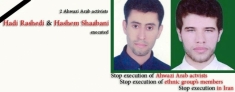
Three Ahwazis have been assassinated and executed in last four days in our homeland Alahwaz, while Hasan Rohani, the president, reassured Ahwazi people in his last week visit to Ahwaz, that there won't be any execution in future at least for unarmed Arab activists.The Ahwazi Assassinated is an Academic and nuclear scientist called: Hamzeh Abbas Kholaifat and the other two are cultural activists, cultural periodical published called: Hadi Rashidi & Hashim Shaabani
.
Media Centre of Ahwazi Democratic Front (A.D.F)
29/01/2014
Reporter: S.J.
News: Execution of Ahwazi-Arab poet in Iran condemned
شباط/فبراير 08, 2014
 (London, 7 February 2014) The execution of a poet from Iran's Ahwazi Arab minority shows the gap between Iranian attempts to improve its international relations and the human rights situation in the country, PEN International, the global organisation of writers, said today. The organisation urged the Iranian authorities to halt all executions and to release all writers, poets, journalists and bloggers held solely in connection with their peaceful exercise of their right to freedom of expression.
Relatives of Hashem Shaabani, a 31-year-old father of one from Ramshir (known as Khalafabad by the Ahwazi Arab community), were reportedly told on 29 January 2014 that he had been executed "three or four days before". He had been transferred on 7 December 2013 to an unknown location from Karoun Prison in Ahvaz city where he had previously been held.
'We condemn this execution as the ultimate violation of the right to life of a fellow poet. In addition, there are serious concerns that Hashem Shaabani was tortured after his arrest to pressure him to make a televised "confession" which was subsequently shown on national television. His trial was thus grossly unfair,' said Marian Botsford Fraser, Chair of PEN International's Writers in Prison Committee.
'While the releases last year of prominent writers such as lawyer Nasrin Sotoudeh and journalist Jila Bani Yaghoub were welcome, the authorities must show that they are truly committed to respecting freedom of expression and other fundamental rights.'
Shaabani was executed alongside fellow teacher Hadi Rashedi after conviction on 7 July 2012 of "enmity against God", "corruption on earth", "gathering and colluding against state security" and "spreading propaganda against the system" by Branch Two of the Ahvaz Revolutionary Court. The sentence had been upheld by the Supreme Court in January 2013.
Both men were arrested in early September 2011, along with three other men, Mohammad Ali Amouri, Sayed Jaber Alboshoka and his brother Sayed Mokhtar Alboshoka, who were tried with them, apparently in connection with cultural activities on behalf of Iran's Ahwazi Arab minority. All five men had no access to a lawyer or their families for the first nine months of their detention and are reported to have been tortured or otherwise ill-treated before and after the verdict.
Background
Hashem Shaabani was a member of al-Hiwar (dialogue), an Ahwazi Arab organisation which promoted Ahwazi Arab culture and campaigned for the right to mother-tongue education in Iran. The organisation's meetings were held in public, and Shaabani read his poetry at some of them. The organisation was banned by the Iranian government in May 2005, shortly after wide spread anti-government protests broke out among the Ahwazi Arab community.
Iran's state-controlled English-language television station, Press TV showed a programme on 13 December 2011 which featured Hashem Sha'bani Amouri and Hadi Rashidi. Hashem Sha'bani was shown admitting that he was a member of the "Popular Resistance" – a group which he said had ties to Saddam Hussein and Mu'ammar al-Gaddafi, the former leaders of Iraq and Libya. Hadi Rashedi was described as "the leader of the military wing of the Popular Resistance" and was seen saying that he had participated in an attack on a house containing four government officials.
In a letter alleged to have been written by Shaabani in prison, he denied having used or advocated violence, said that he had been tortured to make his "confession" and that his three attempts to retract his "confession" in front of a judge were ignored.
PEN International is monitoring the cases of well over 20 writers detained, imprisoned or facing imprisonment in Iran.
For more information/press/interviews contact Sahar Halaimzai: عنوان البريد الإلكتروني هذا محمي من روبوتات السبام. يجب عليك تفعيل الجافاسكربت لرؤيته. PEN
International promotes literature and freedom of expression and is governed by the PEN Charter and the principles it embodies: unhampered transmission of thought within each nation and between all nations. Founded in London in 1921, PEN International – PEN's Secretariat – connects an international community of writers. It is a forum where writers meet freely to discuss their work; it is also a voice speaking out for writers silenced in their own countries. Through Centres in over 100 countries, PEN operates on all five continents. PEN International is a non-political organisation which holds Special Consultative Status at the UN and Associate Status at UNESCO. PEN International is a registered charity in England and Wales with registration number 1117088. http://www.pen-international.org
Iran hangs 40 people in two weeks amid surge in executions
شباط/فبراير 08, 2014
Iran has carried out a total of 40 executions since the beginning of 2014, with at least 33 carried out in the past week alone, said Amnesty International today.
"The spike in the number of executions carried out so far this month in Iran is alarming. The Iranian authorities' attempts to change their international image are meaningless if at the same time executions continue to increase", said Hassiba Hadj Sahraoui, Amnesty International's Deputy Director for the Middle East and North Africa.
The death penalty is a violation of every human being's right to life and is a cruel, inhuman and degrading punishment.
"The Iranian authorities must urgently take steps to abolish the death penalty, which has been shown again and again not to have any special deterrent effect on crime," Hassiba Hadj Sahraoui said.
Since the beginning of 2014, Amnesty International has recorded 21 executions which were officially acknowledged by the Iranian authorities, as well as 19 additional executions reported through reliable sources.
In the week since 9 January 2014 more officially acknowledged executions were carried out in Iran than during the whole month of January 2013.
At least one public execution was carried out on 14 January 2014 in Saveh, Markazi Province, northern Iran, of an individual convicted of murder.
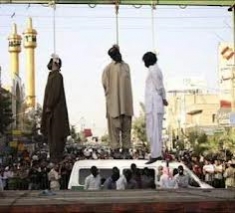
Public executions in Iran are usually carried out using cranes which lift the condemned person by a noose around the neck in front of a crowd of spectators.
The organization is calling on the Iranian authorities to immediately adopt an official moratorium on all executions and commute all death sentences. The Iranian authorities must also end all secrecy surrounding their use of the death penalty.
Most of those executed in Iran had been convicted of alleged drug-related offences. Under international standards, non-lethal crimes such as drugs offences do not meet the threshold of "most serious crimes" to which the death penalty must be restricted. There is also no right to a meaningful appeal for drugs offences under Iran's Anti-Narcotics Law, contrary to its international obligations to ensure that anyone convicted of a criminal offence has the right to appeal the conviction.
"In Iran drug-related offences are tried in Revolutionary Courts which routinely fall far short of international fair trial standards. The reality in Iran is that people are being ruthlessly sentenced to death after unfair trials, and this is unacceptable," said Hassiba Hadj Sahraoui.
Revolutionary Court trials are frequently held behind closed doors and judges have the discretion to restrict lawyers' access to the defendant during pre-trial investigations in limited cases.
Amnesty International opposes the death penalty in all cases without exception.
مهرجان الأحواز يثبت انها ثورة الشعوب وليس ثورة النظام
شباط/فبراير 08, 2014

تمر علينا هذه الأيام الذكرى الخامسة والثلاثين لثورة الشعوب في ايران، الشعوب التي ضحت بأغلى ابناءها لإنتصارها، لكن النظام الإحتلالي الفارسي الفعلي سرق ثورة الشعوب ويحتلفل بها هذه الأيام بعنوان مزيف سموها: الثورة الإسلامية الإيرانية، وهي كذبة تاريخة مازال النظام متمسك بها، في الحال ان الشعوب غير الفارسية في ايران وهي شعوب اسلامية بالتأكيد هي التي اشعلتها وهي التي ضحت من اجلها والأحوازيين لعبوا دورا عظيما في هذه الثورة واعطوا تضحياة جسام لها، منها حرق 220 شاب وشابة احوازيين في سينما ركس في مدينة عبادان انتقاما من ابناء شعبنا ومما قاموا به لإنتصار الثورة وهو وقف استخراج وتكرير وتصدير الغاز والنفط، الأمر الذي كسر ظهر النظام واوقف آلياته القمعية.
بهذه المناسبة يقيم النظام الآن مهرجانا في الأحواز العاصمة وهناك مشاركات لبعض القوميات وبالطبع هناك مشاركة احوازية مؤثرة فنيا وشعبيا حيث فقد النظام وسيفقد اكثر سيطرته على مجرى الأحداث في الوطن خلالها.
المهرجان كانت تحييه فرقة فنية نظمها النظام لتكون صوت اهوازي له، لكنها تحولت وبتأثير من الحضور الشعبي الكبير الدافع باتجاه القضية، تحولت انشطة الفرقة لمهرجان وطني احوازي، جمع الكثير من ابناء الوطن حولها باللباس العربي واعضاء الفرقة امامهم يطربون ويغنون وينشدون عربي وكل آلياتهم تتكلم باللغة العربية، والأجواء الفعلية للمهرجان حول الفرقة تغيرت لأجواء وطنية عروبية خلافا لما اراده النظام لها.
حيي الله ابناء الأحواز جميعا في العاصمة وفي كل المدن الأحوازية، ثورة فبراير 1979 هي ثورتكم وليس ثورة النظام، والإحتفال بها هو حقكم للإحتفال بانتصاراتكم على النظام الشاهنشاهي وحضوركم بكل ما هو عربي هو دال على هوية وطنكم وشعبكم، فحياكم الله يا ابناء الاحواز وشاركوا اكثر وبكثافة وبالزي العربي كل يوم في كل ايام المهرجان وغيروا الوجه الذي يريده له النظام لوجه عربي أحوازي وهذا حقكم،
يذكر ان احياء المهرجان من قبل النظام في الأحواز العاصمة، شاركت فيه بعض الفرق الفنية لبعض الشعوب غير الفارسية الأخرى ايضا وننقل اليكم بعض الصور والفيديوهات التي وصلتنا عن احتفال الأحوازيين في هذا المهرجان بمناسبة ذكرى انتصار ثورة الشعوب لعام 1979.
المركز الإعلامي لـ جبهة الأحواز الديمقراطية(جاد)
{youtube}4akQrwkg9Q4{/youtube}
{youtube}sweGVYXu41U{/youtube}


اعدام جنایتکارانه ١۵ زندانى دیگر بلوچ در چابهار
شباط/فبراير 06, 2014
فعالان در تبعيد: ١۵ زندانى بلوچ زندان چابهار، صبح روز چهارشنبه ١۶ بهمن ١٣۹٢، به طور مخفيانه اعدام شدند.
بنا بر اطلاع "کمپين صلح فعالان در تبعيد"، اتهام برخى از اين زندانيان، بمبگذارى روز ۲۴ آذر ۱۳۸۹ مصادف با تاسوعا در شهر چابهار، اعلام شده است.
بمبگذارى چابهار، طى حملات انتحارى در ميان گروهى از عزاداران شيعه و نزديک مسجد امام حسين چابهار به وسيلهٔ دو بمبگذار انتحارى انجام شده بود.
خبرگزاريهاى رسمى در آن زمان از کشتهشدن حداقل ۳۹ نفر، از جمله يک سرباز وظيفه و سه درجهدار نيروى انتظامى خبر دادند.
کمپين فعالين بلوچ اما اتهامات وارده به زندانيان اعدام شده، را رد کرده و گزارش مى دهد که خسرو ريگى يکى از اين اعدام شدگان، در زمان بمبگذارى تاسوعاى چابهار در کشور قطر به سر مى برده است و پس از بازگشت به ايران بازداشت شده است.
طبق گزارش اين کمپين، يکى از اعدام شدگان از اهالى لوتک زابل به نام خسرو براهوى است و دو نفر ديگر از اعدام شدگان دو برادر از طايفه ريگى بودهاند و دو نفر ديگر که بازهم نسبت برادرى با يکديگر داشته اند از تيره مير بوده اند.
تا اين لحظه مقامات رسمى جمهورى اسلامى ايران در خصوص اعدام اين ١۵ تن اظهار نظرى نکرده و از جزئيات اتهامات و اسامى اين ١۵ نفر اطلاع دقيقى در دست نيست.
ايران از سال ١۹۷۶، به ميثاق بين المللى حقوق سياسى و مدنى ملحق شده است و به موجب ماده ٦ آن، نسبت به الغاء مجازات مرگ، تعهد بين الملى دارد.
اما بر خلاف تعهدات بين المللى، همواره اصل "لغو مجازات اعدام"، توسط مقامات جمهورى اسلامى ايران ناديده گرفته شده است.
بر اساس آمار مرکز اسناد حقوق بشر ايران در سال ۲۰۱۳، بيش از ۵۹۴ نفر در ايران اعدام شدهاند که از اين رقم، ۳۱۷ نفر در ۵ ماه دوران رياست جمهورى حسن روحانى بوده است.
٢٨در همين خصوص، ٢٨ آذر ١٣۹٢، مجمع عمومى سازمان ملل متحد، با صدور قطع نامهاى نسبت به "نقض جدى و مستمر حقوق بشر" و "تداوم هشداردهنده اجراى گسترده احکام اعدام در ايران" ابراز نگرانى کرد.
اما صادق لاريجانى، رئيس قوه قضائيه جمهورى اسلامى ايران در جلسه مسئولان قضايى، با انتقاد از "مخالفت" با اعدام گفته است که مخالفت با اعدام، در واقع مخالفت با حکم اسلام است زيرا قصاص نص قرآن کريم است.
صادق لاريجانى در سالگرد تشکيل شوراى عالى انقلاب فرهنگى سخن ميگفت، اضافه کرد: "در برابر نصوص اسلامى مانند حکم قصاص نميتوان گفت که کدام قرائت چه ميگويد؟ زيرا ما يک اسلام بيشتر نداريم که مرجع معتبر و صحت تفسير آن هم، فهم 'روشمند و مضبوط' مراجع تقليد و علماى دين است
نشانه های پیروزی....بقلم ابو محمد المحمراوي
شباط/فبراير 06, 2014
با توجه به مشاهده شکوفائی استعداد دوشهید همیشه گرامی استادان هاشم شعبانی وهادی راشدی وقدرت آنان درراهبرد ووسعت مساحت وتاثیرگذاری این دوبزرگوار، برنخبه گان عرب الاحواز است که باکسب تجارب همه جانبه، راه آنان را ادامه داده،برسرعت شمارش معکوس دحر غاصب بیفزایند.
بقلم = ابو محمد المحمراوی
سخنان وترس موسوی جزائری که بیش از 35 سال از جانب رژیم غصب وغارت سرقفلی دار احواز بوده،حکایت ازانتصارناشی از موج بیداری مردم عرب علیه خرافاتی دارد که رژیمهای طهران 88سال آنرا وسیله تخدیر جامعه قرار داده وازجانبی زاهدی ها واحمدمدنی ها و سرورانشان باسرکوب ونصب جوخه وجرثقیل و اعدام براحتی مشغول غصب وغارت ذخایر نفت وگاز وآب مردم عرب الاحواز باشند.
جزائری از موج بیداری ترسیده که متفکرانی همانند هاشم شعبانی وهادی راشدی مشعل دار آن بوده وهمچنان می درخشد،مهمترین نشانه های شکست رژیم در قبال فکروقلم هاشم وهادی از روزی عیان گشت که رژیم با تغییر روش اعدام جوانان عرب سه برادران حیدریها وپسرعمویشان رامخفیانه اعدام وازتحویل جنازه خودداری،قبورشهداء رانامعلوم گذاشت .
رژیم پس از 34 سال سرکوب واعدام علنی جوانان عرب آنهم بصورت جوخه ای وجرثقیلی به این نتیجه رسید که اینگونه اعدام علنی بقصد ایجاد رعب و وحشت چاره سازنبوده ونیست،بلکه این باربا مؤسسه اي بنام الحوارو با دو رهبرفرهنگی و روشن فکرازنخبه گان عرب روبروست.
دوجوان نخبه ای که فعالیت خود را برای دفاع ازهویت ملی وفرهنگی مردمشان راه قلم وگفتگو برگزیده وبا حوارمدنی آنهم از شهری بنام خلفیه شروع وباعث تحولی که قابل تصوررژیم نبود شدند،رژیم را با آن همه امکانات یکطرفه،مراکزتبلیغ ورسانه متحیر کردند، جزائری ها خود را درقبال الحوارواخورده دیده، چون مارزخم خورده بفکرحبس وشکنجه این دوبزرگ مرد وهمراهانشان افتادند که تنهاسلاحشان قلم وگفتگو بود.
پس ازدستگیری این دوشجاع وهمراهانشان درموسسه الحوار همگی را به مدت 7ماه درانفرادی مخفی گاه اطلاعات وزیرشکنجه های طاقت فرسا قرارداده تا بااخذ گفته های تلقینی ومهندسی شده اقدام به پرونده سازی وضبط اجباری کنند،براساس گفته های زیرشکنجه آنان که حتی درآئین رسیدگی رژیم قابل استناد نمی باشد،آنان وسه نفر ازهمراهانشان با محاکمه ای صوری محکوم به اعدام کردند.
پس ازخبر تآیید اعدام ودر واقع استاذان قتلشان، رژیم خود را باموجی از اعتراضات فعالان وسازمانهای حقوق بشرجهانی واحوازی روبرو دید، بناچار تنفیذ اعدام را بتاخیرانداخته سعی درفرصت سازی برای اعمال جنایت نمود،تا اینکه اوضاع ناشی ازانتخابات صوری ریاست جمهوری وبتبع آن مذاکرات هسته ای ومعاملات پشت پرده(مسقط)را فرصت مناسبی برای اعدام محبوسین سیاسی بلوچ،کورد وعرب دید.
ناگفته نماند که رژیم وعواملش بسرکردگی موسوی جزایری وپس از شکست پروژه بکارگیری خطیب ونوحه خوانان مزدورمنبری درحسینیه ها،چون مارزخم خورده سخت ازموج بیداری احوازالعرب و بیش ازهرزمان دیگر درهراس واسترس بسربرده،بزعم خود وبرای جلوگیری ازروشنگری اقدام به راه اندازی یک کانال تلویزیونی به زبان عربی وبا نام الاهوازبقصدخلق فتنه ای طائفی ومذهبی نموده، خودفروختگان عراقی وآخوندهای آنسیمیله شده وجیره خوارش را برای مقابله با موج بیداری وصحوه فکری به مزدوری گرفتند،پروژه شکست خورده ای که از قبل با گفتاروخون حیدریها وقلم هاشم وهادی نقش برآب شد.
با توجه به کینه ای که رژیم ازبیان وقلم ونوشته های موثراستادان هاشم شعبانی وهادی راشدی داشت وازجانبی ترس ازشرایط حاد واحتقان ناشی ازحبس مفکران موسسه الحوار،ناچارشد که برای زمینه چینی تنفیذ اعدام چهار جوان عرب فلاحیه وهاشم وهادی، سفرمکررشمخانی به احوازرا تدارک و به تبع آن سفر زمینه سازسه روزه حسن روحانی،یونسی ووزیراطلاعات را پی ریزی کرده،درجلساتی با وجها وشیوخ عرب آنان را برای مهارکردن اعتراضات تطمیع وتهدیدکردند.
پس از بازگشت روحانی از احواز به طهران وشروع مرحله دوم اعدام مخفیانه فعالان سیاسی وفرهنگی عرب، صادق لاریجانی وارد عمل شده، برای توجیه اعدام ها واستمرارآن دراحوازوایجاد ترس و وحشت، اتهامی غیرواقعی با جنبه ای عام ومخصوصا علیه موج بیداری جوانان عرب احوازتحت عنوان تکفیریها را مطرح نمود.وی باهماهنگی موسوی جزائری و بالحن وسخنانی تهدیدآمیزوخلق موضوعی بدور ازحقیقت عنوان تکفیریها را استارت زد.
درحالی که رئیس قوه قضائیه وبه اصطلاح قاضی القضات عقب افتاده ترین کشورهای جهان درقرن گذشته این چنین بی مهابا بی طرفی خود را علنی خدشه دار نکرده وبا عنوان خلق الساعة اتهامی واهی رامتوجه جمعیتی میلیونی نمی کرد.اما جناب صادق لاریجانی پا را فراترگذاشته با القاء چنین اتهام وهمی نه تنها چراغ سبز بلکه با گفته هایی صریح وتحریک آمیزاز سپاه و اطلاعات می خواهد تا اقداماتی علیه موج بیداری جوانان عرب که وی وجزائری برای ایجاد زمینه سرکوب به آن عنوان تکفیری ها داده می شود.
پس ازسخنان تهدیدآمیز صادق لاریجانی ودفاع وی از ادامه اعدامها، رژیم با سوء استفاده ازمساومه کاریها وشرایط منطقه وانشغال افکارعمومی جهان به ژنو2 درمورد سوریه وهمراه کردن اپوزسیون نژادپرست عرب ستیزبا خود،رژیم با جنایتی دیگر دست به اعدام مخفیانه دوبزرگ مردفکر واندیشه عرب موسسه الحوار زد،جنازه ها را تحویل نداده ودرجای مجهولی دفن کرد،خانواده ها وبستگان را ازبرقراری مراسم ختم منع کرد.
گفته های موسوی جزائری ازعلائم انتصاراست.
شکی نیست هرصاحب نظرباتجربه و آشنا به اوضاع فعلی ملتهای غیر فارس درجغرافیائی به نام (ا ی ر ا ن،خصوصا کسانی که ازجهش روبه جلووسریع ملت عرب الاحواز مطلعند این رابخوبی می دانند که رژیم با دو حرکت روشن فکرانه موازی که هردوی آن رژیم وعناصرش را به استیصال کشانده روبروست، یکی موج تسنن ودیگری صحوة الشیعه عرب الاحوازاست که همانند دولبه قیچی درحال قطع عصب وشاهرگ رژیم هستند.
یکی از مهمترین دلائل استیصال رژیم همان خوف از اعدامهای علنی وترس از تحویل جنازه مطهرشهداء وهراس از مراسم ختم آنان است،زیرا رژیم ومزدورانش بخوبی از شرایط واحتقان اجتماعی ناشی از ظلم وغصب وغارت مطلعند، ویقین دارند که اعدام وتحویل جنازه با روش گذشته سیل جمعیت جوانان عرب رابهمراه دارد،جمعیتی غیرقابل کنترل که بر سرعت جهش افزوده عمروبقاء غاصبان را زودترخاتمه خواهد داد.
هر تحلیل گرواقع بین با درنظر گرفتن موارد فوق ونگاه به جمعیت انبوه جوانان عرب شرکت کننده در تشییع جنازه شاعر بزرگوار ملافاضل سکرانی که بعلت فوت طبیعی درگذشت وهمچنین اگر فریادهای ناشی از درد و بی چاره گی موسوی جزایری ازشدت وسرعت موج بیداری جوانان عرب بیفزاید،آنهم پس از شکست همه پروژهای جنایت واغفال وتغفیل را مدنظر قرار دهد، قطعا به نشانه های استیصال رژیم روبه فنا که امری قریب الوقوع است پی می برد.
یقینا دریافت خبرشهادت هرجوان ونخبه عرب برای ملت ما تآلم آوراست چنانچه برای دیگر ملل هم سخت ومؤلم، اما رژیم با ارتکاب جنایتی بمراتب وحشیانه ترازقبل وبا روش اعدام مخفی، عدم تحویل اجساد ومجهول بودن محل ذفن ومنع مراسم ختم، آنهم فقط دراحوازالعرب را به ده نفر رساندوبزعم خودنظر برمحدود کردن حرکت روبه پیش احوازالعرب دارداما ازدرون می داند که خیالی باطل کرده،این خیال باطل درسخنان اخیرجزائری درمورد وقف پیداست.
هرچند رژیم بااعدام دوستاره درخشان علم وفرهنگ عرب الاحواز استادان هاشم شعبانی وهادی راشدی ما را محزون کرد،اما هنوزچندروزی ازشهادت این دو گوهرعلم وتقوی نگذشت که ناله ها وفریاد احتظاررژیم غاصب ازحنجره موسوی جزائری عیان گشت،او شاهد وسعت تاثیرگذاری وپردازش نورمؤسسة الحواروقلمهای سروران شهید ملت عرب الاحواز بوده وبخوبی می داند که خون آنان چه خواهدکردوچه سیلی از بیداری به راه انداخته است.
با توجه به مشاهده شکوفائی استعداد دوشهید همیشه گرامی وقدرت آنان درراهبرد ووسعت مساحت وتاثیرگذاری این دوبزرگوار، برنخبه گان عرب الاحواز است که باکسب تجارب همه جانبه راه آنان را ادامه داده،برسرعت شمارش معکوس دحر غاصب بیفزایند.
فریاد جزائری ها مؤيد کارساز بودن تفکر وراهبرد این دوشهید روشنفکر است،تفکر این دوشهید فرهنگ دوست وعلاقمند به هویتشان باعث طرد خرافاتی شد که نژادپرستان عرب ستیز طهران آنرا برای مقاصد شوم بکار بسته اند،اهل بیت پیامبر(ص) را برای ادامه غصب وغارت ذخایر و منابع هزینه کردند، منبر هزاران حسینیه را نه برای ادامه راه شجاعانه امام حسین (ع) بلکه برای رواج جهل وخرافات وتخدیربکار گرفتند،و از جانبی 88 سال است که با ممنوع کردن درس ومدرسه به زبان مادری وعربی عمدا جهل راتوسعه داده، باغصب وغارت ذخایربه جنگ هویت عربی مردم الاحواز که هم زبان قرآن وهم هویت آل بیت (س)است درستیزند.
عمق فریاد موسوی جزائری مؤيد خوف ووحشت او ازامواج شدید جریان بیداری جوانان عرب است که وی وصادق لاریجانی بقصد فضاسازی برای اىامه جنايت هاي رژیم این بیداری را تهاجم شدید جریان تکفیری میدانند،پس برشما نخبه گان عرب است که با تمام توان مکر وحیله های رژیم ومزدورانش را افشاء نموده راه شهداء نون والقلم ومایسطرون را ادامه دهید.5/2/2014
لطفا با تعمق سخنان متناقض موسوی جزائری را درلینک خودشان بخوانید.
http://farsnews.com/newstext.php?nn=13921115000996